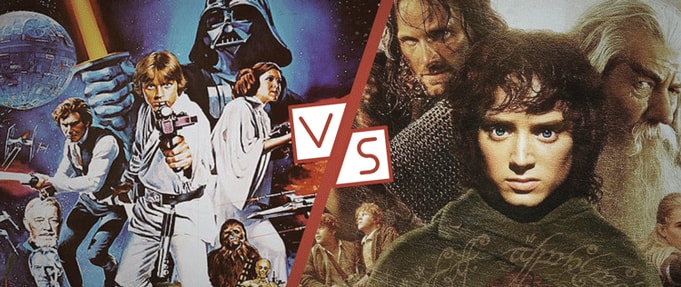
Fans of speculative fiction might recognize that fantasy and science fiction are two distinct genres, each with its own conventions and stereotypes, even as they share similarities and borrow from each other. At the first glance, the fantasy genre might seem inextricably connected to myths or medieval settings, and science fiction as dealing with advanced technology.
But there are plenty of time-travel SF novels set in the remote past, and several fantasy stories involve supernatural events unfolding in contemporary society. At the same time, both genres transport readers to different worlds, providing a much-needed escape from everyday reality.
So let’s get into the nitty-gritties of generic distinctions, and try to understand how literary scholars, acclaimed authors, and even the average bookworm have learned to tell the two genres apart!
Magic or Science
Both genres address events and situations that cannot be fully explained by current scientific laws or rational logic. In fantasy novels, this non-real component is usually referred to as “magic”—a mystical source of energy that can bring the dead back to life or cause a person to fall in love with another person.
In SF, instead of some unexplainable magic causing spaceships to travel at the speed of light or shooting laser beams, it’s usually some form of “advanced technology." In short, SF concerns advances in scientific knowledge and speculates on how human civilization and technology may evolve.
In that regard, SF can also be eerily prescient and prophetic, as in William Gibson’s cyberpunk novel Neuromancer, which anticipates the widespread use of the internet. Another way to look at the “magic vs science” distinction is that fantasy imagines what’s impossible, while SF speculates on what might be possible, given the right resources and breakthroughs.
Elf or Plutonian
In one of my favorite fantasy novels, Among Others by Jo Walton, a character asks another member of the book club, “Which would you rather meet, an elf or a Plutonian?” It’s not just a subtle way of asking what kind of non-real characters they like, but an understated way of figuring out a person’s genre preferences.
In a fantasy novel, one is more likely to encounter elves, dwarves, orcs, and the like, while aliens (such as Plutonians) or robots are more easily found in SF novels. So, the kind of characters we meet in a book can give us a clue as to the genre it belongs to.
Past or Future
Although there are plenty of exceptions, fantasy novels often hearken back to a romanticized and more magical past, while science fiction books tend to be set in the near or far future.
For instance, J.R.R Tolkien’s The Lord of the Rings unfolds in the fictional land of Middle-earth, with many locations such as the “Shire” evoking the vibes of an idyllic English countryside or a pre-Industrial era. Meanwhile, SF novels, such as Asimov’s Foundation books, unfold in a far-future where humankind has control over the vast reaches of the galaxy.
It’s not just the time period but also the specific settings that help readers tell apart the two genres. Fantasy novels often draw on historical periods for inspiration, such as George R.R. Martin’s A Song of Ice and Fire, which draws heavily on the War of the Roses.
Meanwhile, SF novels take place aboard spaceships, in dystopian settlements, and on other planets. So many fantasy novels feature characters drinking ale at a “medieval”-esque tavern, while those in an SF story might hang out in futuristic locations, such as the found family in Becky Chambers’ The Long Way to A Small, Angry Planet.
Coin or Credit
Small elements of worldbuilding also provide vital clues about a book's genre. For example, when it comes to currency, characters in fantasy novels or on a Dungeons and Dragons adventure are constantly in need of “coin” to fund their escapades.
In an SF novel, you might find a similar character perpetually on the run from debtors because they don’t have “enough” credits—and the debtors might still follow you to another planet, as we saw in Mickey 17.
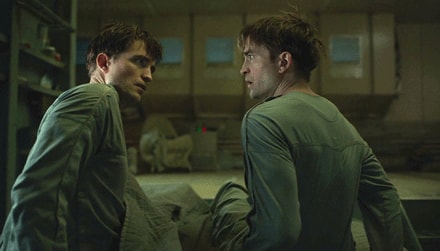
 Photo Credit: Warner Bros. Pictures
Sword or Blaster
Similarly, in terms of weaponry, fantasy novel characters are likely to be expert duelists, swordsmen, or archers. A fantasy prince may go in for fencing classes, archery lessons, or horse-riding, or even falconry, as part of their “medieval” curriculum, like in T.H. White’s The Once and Future King that explores and subverts the Arthurian mythos. Or their weaponry might be composed entirely of magical instruments, be it wands, staffs, or conjuring flames out of thin air.
In SF novels, battles might literally be of galactic proportions, with military spaceships shooting down each other, or characters using blasters, laser beams, or light-sabers to attack or defend from enemies. To take two popular examples from pop culture, just contrast the fights between the “good” and “bad” wizards in Harry Potter with the “Jedi” and “Sith” skirmishes in Star Wars.
Stew or Serum
Most characters, even the supernatural ones or cyborgs, require something for sustenance. Fantasy cuisines again borrow heavily from a medieval menu—characters typically feast on bread, cheese, roasted boar, soup, and so on. The Tough Guide to Fantasyland by Dianna Wynne Jones actually pokes fun (very gently) at some of these fantasy “staples.”
But SF protagonists might have some kind of nutrient serums injected into their skin or enjoy a meal of alien exoskeleton at a shady bar in an orbiting space station. Of course, there’s also plenty of variety in here—with both genres featuring delectable dishes that couldn’t possibly exist in our world, such as “Lembas” bread (in The Lord of the Rings), the enchanting Turkish delight (in The Chronicles of Narnia), and whatever magical concoctions that fairies offer mortals to lure them away.
Marketing
Finally, what sets a fantasy novel apart from a science fiction novel may simply be marketing. Genre labels and tags are utilized by publishers to decide how to sell books to the “right” target audience. For instance, fantasy novels with romantic subplots have been around for a while, but labelling certain recently-published works as “romantasy” helps sell them better.
Similarly, some novels are marketed as “science fantasy”—usually when the SF elements are present but not explained in great detail. Several books actually blend elements from both fantasy and SF, such as N.K. Jemisin’s The Broken Earth trilogy or Tamsyn Muir’s Gideon the Ninth remind us that genre labels tell an incomplete story and there’s always more to a book than what meets the eye.
Featured image: 20th Century Studios and Warner Bros. Pictures


