

One of the most critically acclaimed writers of our time, Kazuo Ishiguro is probably most associated with literary fiction. That said, he has regularly explored science fiction themes in his work. Perhaps the most famous of these is Never Let Me Go, a novel that blends coming-of-age, clones, and mortality while meditating on what it means to be human and the existence of the soul.
But a more recent novel of his, Klara and the Sun, continues the exploration of humanity in science fiction trappings, this time through the eyes of a brilliant but childlike robot. Set in a dystopian future, Klara and the Sun follows an android who is chosen to be the companion of a sickly girl in a society where children are genetically enhanced to boost their intelligence.
The eagerly anticipated film adaptation by Taika Waititi hits theaters today.
Ishiguro is hardly the first author to write about intelligent androids, though. Before artificial intelligence became a hotly debated topic involving labor, the environment, and the economy, it was a beloved subject of science fiction. Sometimes AI robots served as convenient vehicles to explore existential questions, similar to what Ishiguro does in his works. Or perhaps they allowed writers to examine prejudice and bigotry.
The selections on this list continue that trend.

An Unnatural Life
In this science fiction legal thriller, a female defense attorney takes on a case involving a robot. Aiya Ritsehrer is a lawyer from Earth, where artificial life forms have just been given legal rights. But on Europa, one of Jupiter’s moons, people are less keen to offer those same protections.
Enter 812-3, an imprisoned robot found guilty of murdering a human. He insists upon his innocence, however, and as his lawyer, Aiya must put together a case for appeal. No one is thrilled by the prospect of an appeal, though. After all, doesn’t every convict protest their innocence, robot or not?
Unfortunately, this may include Aiya herself, since she has her own prejudices toward AI.

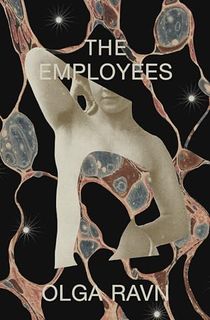
The Employees
Unusually structured as a collection of HR reports, Ravyn’s literary novella is a science fiction meditation on workplace culture. Here, humans and androids make up the crew of a generation ship. But when their ship takes aboard some objects from a planet and the crew is tasked with looking after them, both humans and machines begin to change.
The humans yearn for a life away from the ship. But the androids yearn for life itself. And in the pressure cooker that is a spaceship, these diverging perspectives soon come to a head.
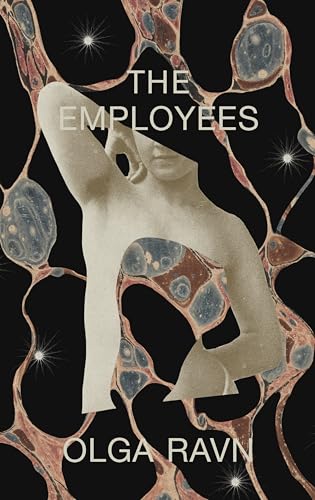
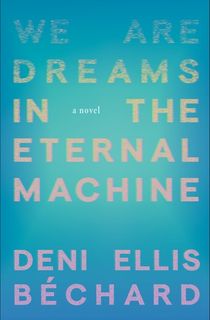
We Are Dreams in the Eternal Machine
In Bechard’s novel, an experimental AI is charged with a deceptively straightforward mission: to never harm humans and to protect them. In this case, the AI decides the best way to do that is by separating humans, isolating each of them in a controlled environment, and immersing them in worlds where all their desires are fulfilled. To an AI, which is simply an algorithm trying to reach the most likely answer, it is the perfect solution. The dilemma, however, is whether that is actually the case. Isn’t struggle part of the human condition?
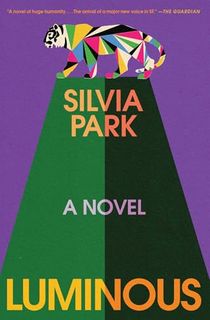
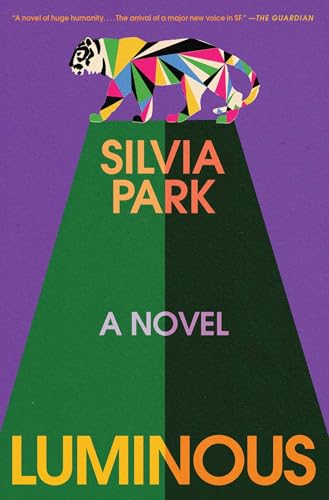
Luminous: A Novel
In Park’s award-winning debut novel, three separate narratives weave together to present a tale that explores grief, trauma, relationships, and humanity. Set in a near-future where South Korea and North Korea have reunified, the story follows the young Ruijie and estranged siblings Jun and Morgan.
The disabled Ruijie relies on robot parts to survive. Morgan makes robots for a living, arguably an occupation inspired by her father. And Jun is a detective who investigates robot crimes. But when Ruijie’s search for scraps uncovers a robot boy, their lives collide in the most unexpected of ways.
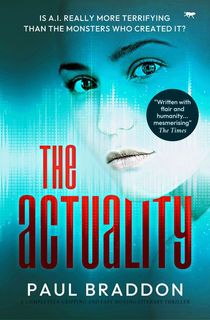
The Actuality

Like Klara and the Sun, Braddon’s novel is told from the perspective of a robot. Evie is a bio-engineered human. In fact, she’s what scientists call “true AI.” Savvy science fiction readers would surmise that creations like Evie would cause a problem among the general populace, and they’d be right. That’s why Evie lives hidden away, only revealing herself to her husband, Matthew, and Matthew’s servant, Daniels.
As it turns out, her very existence is illegal. So when an unfortunate string of events exposes her to the world at large, Evie goes on the run. Because despite the dubious legality surrounding her existence, many companies are interested in examining her and seeing exactly how she works.

Annie Bot: A Washington Post Best Science Fiction Book of the Year
If the husband in The Actuality viewed its female AI as nothing more than a smart robot, Annie Bot is viewed by her owner as the perfect girlfriend. She was made to fulfill his every desire. She was programmed to please him. But part of that programming means that she learns. And the more she learns, the more human she becomes. Her owner claims that he loves how human-like she’s becoming.
But this introduces a paradox. The more human Annie becomes, the less perfect she is in her owner’s eyes, and he likes that not at all. Annie Bot asks the crucial question: can love exist in a relationship where one party holds far power over the other?


Service Model
If you’ve ever wondered what the adventures of Don Quixote would look like if he were a robot, Tchaikovsky’s novel handily answers that question. Charles is a robot that serves as a valet to a wealthy man. Like many other robots in this category of science fiction novel, he’s been programmed to anticipate his employer’s every wish and need.
But when Charles accidentally kills his employer, that programmed routine is erased. After all, if his very purpose was to take care of his employer, what does he do when that employer is gone? Thus, Charles embarks upon a quest to find a new human employer. Unfortunately, he soon makes another ugly discovery: the world is a wasteland, and humans are almost entirely wiped out.
What’s a robot to do?

Featured image: Sony Pictures Entertainment / YouTube


