It’s Banned Books Week, an annual reminder not to take our freedom to read for granted. While the conversation currently revolves around books pulled from classroom shelves, science fiction and fantasy (SFF) creators have long imagined worlds where those shelves are already empty.
The books below drop us into worlds much like ours, where someone attempts to control what people can read, what they can know, or who they’re allowed to become. They show how language erodes, how memory slips when nothing is left to anchor it, and how easily people accept a manufactured world because it’s convenient or because they’ve been told it’s for their own good.
Speculative fiction has the power to transport readers to another planet, century, or kingdom so we can safely examine power, corruption, and trauma without the defensiveness we bring to our own politics. And though it's sometimes derided as mere escapism, stepping into an imagined world can be a vital act of survival when the world you’re escaping is in a crisis of its own.
Regardless of genre or setting, fictional or not, people who ban and challenge books tend to insist they’re protecting someone.
The same holds true in nearly every one of these novels. Protection is the mechanism for overreach, and the first thing taken isn’t the book but the ability to notice it’s gone. So lose yourself in these worlds, but be sure to notice what you're still carrying, and questioning, upon your return.
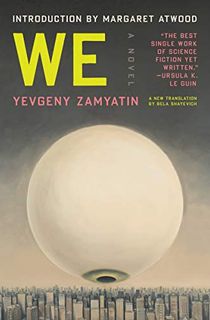
We: A Novel
This 1921 science fiction dystopian novel pictures a totalitarian future society called the OneState, where people live in glass buildings and go by numbers instead of names. A mathematician named D-503 has spent his life blindly following the state’s rigid rules until he falls in love with a rebellious woman named I-330 and begins to develop a forbidden individual soul.
The regime outlaws independent thought, unapproved desires, and fantasy, mirroring real-world challenges against books that explore taboo or non-conforming philosophies. The book is a groundbreaking critique of mass control that later inspired famous dystopias like Orwell’s 1984.
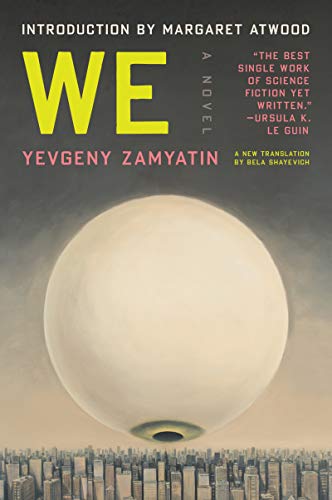
“Knowledge, absolutely sure of its infallibility, is faith.” — Yevgeny Zamyatin, WE

Vita Nostra
Sasha Samokhina is a teenager blackmailed by a sinister, supernatural figure into enrolling at the remote Institute of Special Technologies. There, students are forced to study completely incomprehensible, reality-warping texts under the absolute threat that any failure will cause horrific tragedies to befall their loved ones.
As the brutal curriculum slowly deconstructs her humanity, Sasha undergoes a mind-bending, metaphysical metamorphosis to discover that she is not learning magic, but transforming into a literal part of speech within the fabric of the universe.
The novel shows that true education requires engaging with difficult and radical ideas rather than conforming to an enforced orthodoxy.

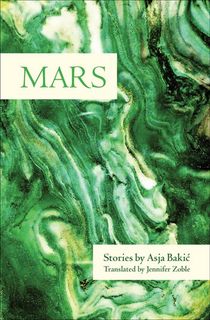
Mars
Mars is a debut collection of ten speculative short stories that blends elements of science fiction, horror, and magical realism to construct twisted, dystopian universes where female characters must make sense of their strange realities.
Through subversive narratives that include clones, purgatorial writers, and worlds devoid of physical contact, Bakić delivers a sharp feminist critique of patriarchal oppression, objectification, and censorship.
"I always read dystopian fiction carefully […] but it never occurred to me that I’d actually experience it one day." ― Asja Bakić, Mars

The Last Cuentista
When a comet threatens Earth, Petra Peña boards a spaceship to a distant planet with her grandmother’s traditional Mexican folklore in her mind. After waking from a centuries-long cryo-sleep, she discovers an authoritarian cult has erased the crew’s memories to build a "perfect" society free of the past.
As the only person who still remembers Earth and its history, Petra must use her forbidden storytelling to reawaken her fellow children and protect humanity's soul.
What happens when someone forgets who they are and where they came from? And what happens when imposed sameness has much greater consequences than embracing differences?

“The stories we tell ourselves make us who we are.” ― Donna Barba Higuera, The Last Cuentista
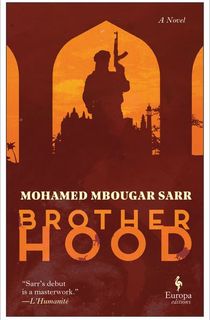
Brotherhood
Set in the fictional North African city of Kalep, two parallel narratives unfold under the control of an extremist fundamentalist regime called the Brotherhood. After two young lovers are publicly executed, their grieving mothers start writing secret letters to each other. Meanwhile, a local doctor leads a secret group of writers who print an underground newspaper to spark a peaceful resistance.
In Brotherhood, reading and writing are inherently political, liberating acts, and literature and journalism are the only tools capable of awakening the mass consciousness and disrupting state-mandated silence.
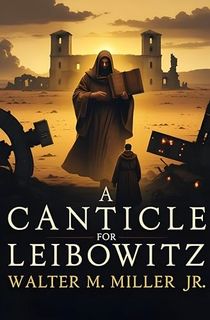
A Canticle for Leibowitz
Humanity is slowly rebuilding itself after a devastating nuclear war, and a group of cloistered monks is secretly preserving the surviving scientific remnants of the pre-apocalyptic world. As civilization gradually rediscovers technology and enters a new renaissance, the cycle of human hubris inevitably repeats itself.
Destroying books and weaponizing ignorance inevitably traps humanity in a cycle of self-destruction, and by exploring the timeless struggle between institutional control and intellectual freedom, we’re reminded that protecting the written word is essential to survival.
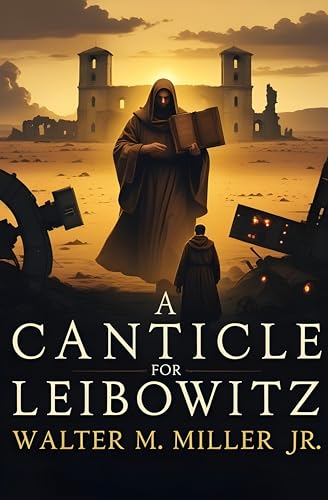
“Even literacy they fear, for the written word is another channel of communication that might cause their enemies to become united.” — Walter M. Miller Jr., A Canticle for Leibowitz

The Library at Mount Char
Carolyn is a young woman who was adopted by a god-like being known as Father after her hometown was destroyed. Along with 11 other orphans, she’s raised in a mysterious library containing the secrets of the universe, with each child forced to master a different, often gruesome, catalog of cosmic power.
When Father suddenly vanishes, the librarians must venture into the modern world to find him, unleashing an apocalyptic power struggle against both outside forces and each other.
This novel asks us to reflect on who decides what information is accessible, and whether we can rediscover empathy and compassion after being exposed to godlike knowledge and absolute cruelty.

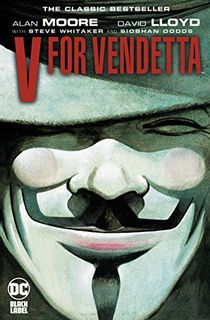
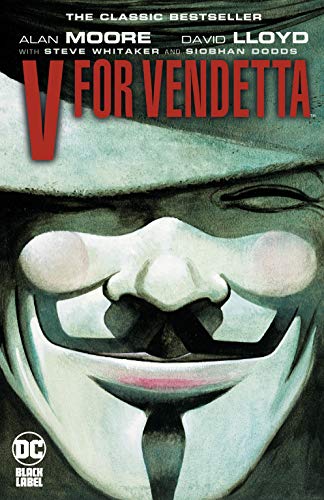
V for Vendetta
In a dystopian, totalitarian Britain, a masked freedom fighter only known as “V” uses terrorist tactics to fight back against the oppressive fascist state. After rescuing a young woman named Evey Hammond from the secret police, he unexpectedly recruits her to become his ally and the heir to his revolutionary mission.
As V orchestrates a series of calculated attacks to topple the government, Evey undergoes a brutal transformation, discovering her own strength and the power of individual conviction.
The oppressive authorities in this novel use censorship to enforce conformity, and by using a hidden room filled with forbidden culture as the ultimate sanctuary of human dignity, the story reminds us that saving books is fundamentally about saving the individuals who read and write them.
“Knowledge, like air, is vital to life. Like air, no one should be denied it.” ― Alan Moore, V for Vendetta


