
The Name of the Wind by Patrick Rothfuss is one of the best works of high fantasy to come out this century. The first entry in the author’s Kingkiller Chronicles trilogy, it’s a sweeping epic in every sense of the term—locating itself firmly in the high fantasy tradition, in the vein of Tolkien and George R.R. Martin, borrowing from mythology and classics, and revitalizing the genre with wit, lyricism and character-driven drama. The novel is structured like a story-within-a-story (otherwise known as a framed narrative). It recounts the infamous adventures of Kvothe, a prodigy and charismatic storyteller. Kvothe enlists the Chronicler, a traveling scribe, to record his tale—a task that will take three days, with each day corresponding to a single novel (hence, the planned trilogy).
Following the resounding success of The Name of the Wind in 2007, the author followed it up with The Wise Man’s Fear in 2011, and has since released two more novels set in the same fantastical universe, The Slow Regard of Silent Things (2014) and The Narrow Road Between Desires (2023) that primarily focus on the secondary characters while also deepening the worldbuilding lore. The final book in the trilogy, The Doors of Stone is yet to be released.
Whether you’re looking for something equally epic or you’re eager to dive deep into Rothfuss’s creative writing process, you can check out the following books whose themes, plotlines, characterization, and styles influenced The Name of the Wind.
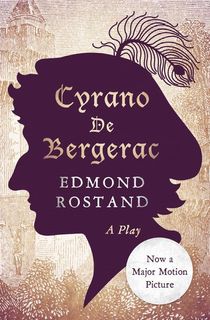
Cyrano De Bergerac
Cyrano de Bergerac is a 19th-century play by French writer Edmond Rostand. The play is written entirely in verse, drawing upon the life and times of 17th-century novelist and playwright Cyrano de Bergerac, along with invented elements. In an interview with FantasyBookCritic, Rothfuss said he read Cyrano de Bergerac right before he began writing his book and that Cyrano’s characters reminded him of “what it really means to be a tragic hero."
The titular character in The Name of the Wind, Kvothe, has had his fair share of tragedy, yet struggles as an unreliable narrator and unlikely hero, sharing some similarities with Rostand’s historical protagonist.

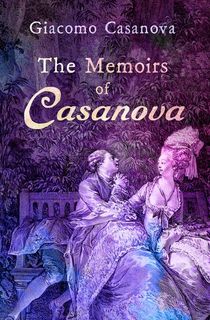
The Memoirs of Casanova
In the same interview with FantasyBookCritic, Rothfuss also mentions reading Giacomo Casanova’s memoirs soon after starting his book. It opened his eyes to “how interesting an autobiography could be, provided the person telling it has a way with words and has lived a sufficiently adventurous life.” In many ways, The Name of the Wind can be regarded as a fictional autobiography of Kvothe whose larger-than-life character bears some uncanny similarities to Casanova, a real-life 18th-century Venetian adventurer.
Numerous versions of Casanova’s sensational writings exist, revealing a very vivid and varied life. Just as Casanova constantly reinvented himself to survive and attract patrons, so did Kvothe who dabbled in music, magic and storytelling to make his way in life and uncover information about the villains who murdered his parents.

The Last Unicorn
Another book that influenced Rothfuss was Peter S. Beagle’s enduring fantasy classic, The Last Unicorn. Rothfuss is a huge fan of Beagle’s book and got the chance to meet the writer at Worldcon. At one of the panels, Beagle talked about how The Last Unicorn was both a “faerie tale” and a “spoof of a faerie tale”—just as Rothfuss was writing a heroic fantasy novel offering meta commentary on the genre.
Both books are intensely aware of the genre’s history and context—and yet tries to do something new with its self-aware characters and subtle meta-commentary on the genre. At its heart, The Last Unicorn follows the adventures of one unicorn who truly believes she’s the last of her kind, on a valiant quest to discover what has happened to the others. Entertaining and poignant, it’s a timeless classic for a reason.


The Lord of the Rings Trilogy
Any serious genre writer worth their salt will have read and reread The Lord of the Rings and Tolkien’s other works a bunch of times. Regarded as the father of high fantasy, Tolkien’s The Lord of the Rings laid the blueprint for modern high-fantasy novels by inventing a highly detailed fictional world (Middle Earth), populating it with magical creatures, and giving characters particular quests and missions to solve as part of an over-arching good-vs-evil storyline.
Like The Lord of the Rings, The Name of the Wind also takes place in a magical continent (Temerant), filled with all sorts of supernatural beings, involved in an ancient war at the heart of which Kvothe suddenly finds himself also drawn in.


A Wizard of Earthsea
Along with an intricate plot, detailed worldbuilding, and refreshing characters, Rothfuss’s novel offers remarkable prose—evocative and lyrical at the same time. Naturally, Rothfuss has drawn comparisons to Ursula Le Guin, whose works are rendered in lucid and beautiful prose. Kvothe’s experiences with magic as well as the rules of the novel’s magic system will certainly remind readers of Le Guin's A Wizard of Earthsea.
A Wizard of Earthsea follows a young protagonist called Ged as he learns about magic, trains to be a wizard, makes some terrible mistakes and eventually grows as a character, in an enthralling coming-of-age narrative that subtly mirrors Kvothe’s own journey.


The Sword of Shannara
Just as the story of The Name of the Wind unfolds in the “known” parts of Temerant (called the “Four Corners of Civilization”), the narrative in Brooks’s trilogy takes place in a fantastical realm named “the Four Lands”. Heavily influenced by The Lord of the Rings, Brooks’s books expand upon the high fantasy genre with engaging quests, vivid worlds and magical creatures with their own unique cultures, while also being hugely entertaining.
A commercial success, The Sword of Shannara paved the way for future works like The Name of the Wind to be similarly viable.


