The 2020s have been on a generational roll with science fiction and fantasy television series, with shows like Dark Matter and 3 Body Problem drawing huge audiences and passionate fanbases. But as any bookworm will tell you, the screen only tells part of the story.
The novels behind these series offer deeper worldbuilding, richer interior perspectives, and sometimes entirely different twists. Here are the books to pick up once the credits roll.
Dark Matter (2024)

Dark Matter
Have you or anyone you know been personally affected by the events resulting in Dark Matter’s season two finale and are now anxiously waiting for the series’ season three renewal? We've got you covered.
The season two reception for Dark Matter has arguably surpassed its first season’s success, for more reasons than one! While season one was adapted from Blake Crouch’s 2016 science fiction novel by the same name, season two expanded and continued to build upon the universe set up by Crouch.
Additionally, season two does what season one did not: it pushes past the strict confinements of the hard science fiction genre and becomes a fully fleshed out science fiction drama, exploring familial themes of grief and change, nostalgia and regret, and does so with two of the best bottle episodes in recent science fiction television.
The tonal shift comes straight from the source itself: Blake Crouch and editor Jacquelyn Ben-Zekry wrote season two together, continuing right where season one left off and treating the new season like a sequel to the original material.
While reports of a season three renewal have not yet hit our screens, Crouch’s original novel remains a bestseller and the best thing to binge while waiting for the next season or the best form of recapping season one before binging all of season two, which is available in full on Apple TV.

Murderbot (2025)

All Systems Red
Another Apple TV science fiction series we’re eagerly anticipating season two for is, of course, Murderbot! The lovable security unit, played by the legendary Alexander Skarsgård, left audiences and fellow characters somewhat surprised after he willingly left Mensah, Gurathin, and the others’ home planet to travel the universe alone.
Murderbot’s self-proclaimed hatred for humans and longing for freedom align with the season’s finale, but viewers know that Murderbot’s arc throughout the season made him soft: inside its metal exterior is a drama-loving, deeply empathetic system not so different from the humans it claims to hate.
For those not patient enough to wait for season two’s premiere, Martha Well’s The Murderbot Diaries has nine volumes (including three novellas) ready for you to devour. Starting with All Systems Red, the source material behind season one of Murderbot, follow along Murderbot’s journey throughout the universe as it searches for answers far and wide.
With season two officially wrapping production and heading toward a summer 2027 premiere, we can assume the season will primarily adapt the second book, Artificial Condition, which follows Murderbot teaming up with a research transport vessel named ART to investigate the dark, forgotten memories of its past massacre.

3 Body Problem (2024)

The Three Body Problem
When will Netflix learn that eight episodes every three years simply isn’t enough to capture the scope and wonder of the material presented in the best of the best science fiction (or any other) adaptations?
Your patience has been rewarded: seasons two and three of 3 Body Problem have been renewed by Netflix and are currently under post-production, with filming having wrapped in Budapest earlier this year! While a projected 2026 premiere date was announced earlier this year, the exact month and date still have not been announced publicly.
In the meantime, we know the final two seasons will be following books two (The Dark Forest) and three (Death’s End) of Liu’s Remembrance of Earth’s Past trilogy, so there’s no better way to recap ahead of season two by reading Liu’s first volume, The Three Body Problem!
TV-only fans will be delighted to read detailed explanations on any concepts they may have missed throughout season one, as Liu’s writing thoroughly explains the science behind the fiction while still managing to completely blow your mind.

Snowpiercer (2024)
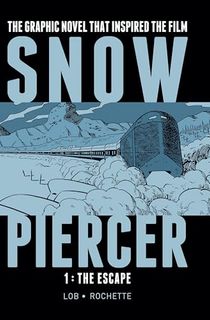
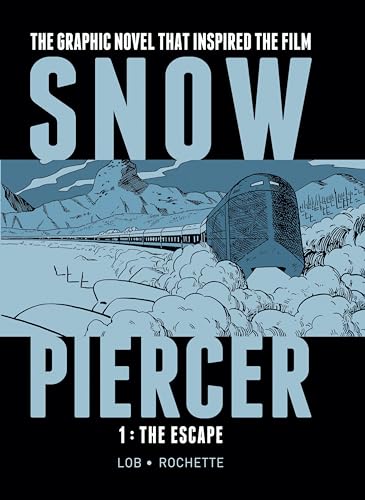
Snowpiercer, Vol. 1: The Escape
It might be slightly more common knowledge that Snowpiercer also has a 2013 movie by the same name directed by Bong Joon-ho (the same director behind Parasite and Mickey 17), but did you know that both Snowpiercer’s are actually based off the French graphic novel called Le Transperceneige by Jacques Lob and Jean-Marc Rochette?
Originally published in 1982 by Casterman, Snowpiercer has an original trilogy as well as a couple of modern sequels and prequels. With Snowpiercer having come to a conclusion in 2024, there’s still plenty of material to read and watch in order to stay connected with the never-ending train, starting with the original comics (translated and published in English by Titan Comics).
Foundation (2021)

Foundation
After three successful seasons, Foundation was renewed for a fourth season on September 11th, 2025, ahead of its season three finale on September 12th. While Apple TV’s science fiction drama still doesn’t have a set premiere date despite having production wrap up earlier this year in Czech Republic, season four is expected to premiere late 2027, giving fans about a year to pick up the science fiction canon that serves as the loose inspiration for the series.
Foundation is by no means an extremely faithful adaptation of its namesake, but it does what good TV does and pieces together the best plot for the silver screen. The two formats share many aspects, such as their century-sprawling timelines and main characters, and the season three finale lines up with the end of the second book in the series (Foundation and Empire), leaving plenty of room for future renewals and deeper expansions of the world Asimov built nearly 75 years ago!

Silo (2023)

Wool
Silo’s dystopian future is actually based on Hugh Howey’s trilogy by the same name, starting with the first novel, Wool, which was originally published as a short story in July of 2011.
Silo officially has three full length novels, Wool, Shift, and Dust, along with several short stories and other companion pieces, such as “In the Air,” “In the Mountain,” and “In the Woods,” which are collected in Howey’s short story compilation Machine Learning.
With season four set to be released next July, we can assume the plot will closely follow the events of the third novel, Dust. While Silo’s screen adaptation has received stellar reviews, readers everywhere unanimously agree that the books are exquisitely more involved (no surprises there), so get your hands on the trilogy if you haven’t already!

Love Death + Robots (2019)
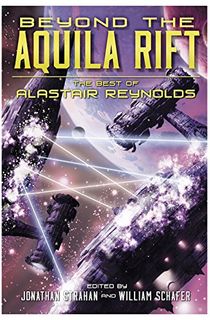
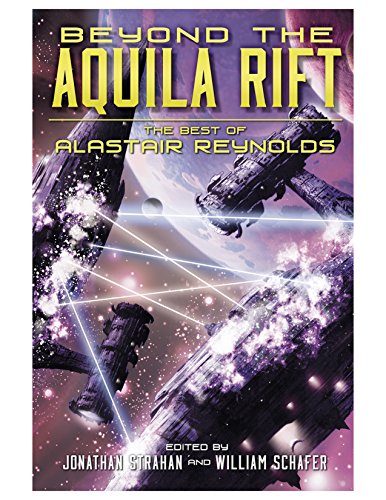
Beyond the Aquila Rift: The Best of Alastair Reynolds
Is it cheating to include a series that started in 2019 if its fourth volume came out last year? I'll let it slide because Love Death + Robots is arguably one of the best animated anthologies of the 21st century and a personal favorite of mine!
While not every episode is about love or death or robots, at least one or more concepts are in every episode, making for an extremely fun and thought-provoking bite-sized piece of entertainment.
Created by Tim Miller for Netflix, it was originally in production with plans to be a reboot of the popular fantasy anthology film Heavy Metal.
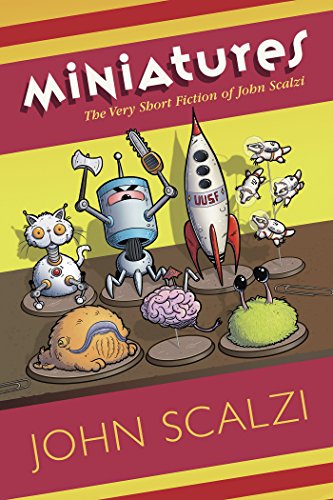
Miniatures: The Very Short Fiction of John Scalzi
One of my favorite aspects of the series is the different styles of animation used throughout each episode.
Though it is produced overall by Blur Studios, each episode is animated by a variety of animation studios, a nice parallel to the fact that most of the episodes are also inspired by or adapt science fiction short stories by different authors!
Some of the most iconic short stories that inspired episodes in Love Death + Robots include Scalzi’s “When the Yogurt Took Over” and Reynolds’ “Beyond the Aquila Rift.”
I Am Not Okay With This (2020)
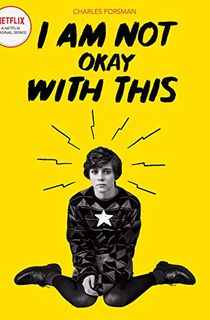
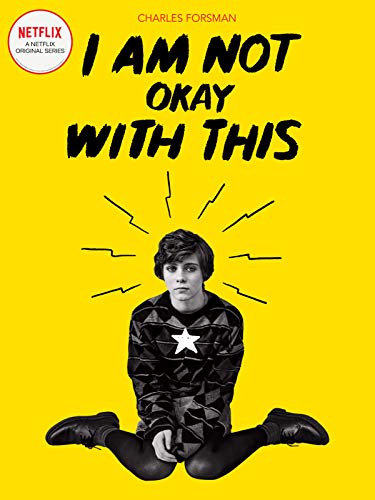
I Am Not Okay With This
I Am Not Okay With This is just one small chain in the long link of “great series that were cancelled after only one season,” but we can definitely point to the 2020 pandemic for this cancellation, not the quality or content in the series!
I Am Not Okay With This is an American coming-of-age black comedy series that is actually based on the 2017 graphic novel of the same name by Charles Forsman. Forsman also wrote the source material behind the Netflix series The End of the F***ing World, which ran for two seasons in 2017 and 2019.
If you were part of the hopeful audience waiting for season two back in the day, you’ll want to check out Forsman’s original comic; our beloved Sydney Novak explores the everyday angst of high school bullies, unrequited feelings, queer coming-of-age storylines, unwelcome telekinesis, and a drastically different ending that changes how you see the entire series!
No spoilers here though… you’ll have to read it to find out why the showrunners completely changed the ending.
Featured Image: Unsplash / Nadi Borodina


