
Ghost stories have been passed down for centuries, retelling tales of spirits returning from the dead and haunting the places they left behind. They appear in our reflections, rattle creaky antique cabinets, and demand the living’s undivided attention.
Although many people don’t believe in literal paranormal activity, ghost stories have a very human core, asking the age-old question, “What comes after?” They promise immortality and offer us the belief that our individual complexities don’t get completely wiped when we die.
So what are ghosts if not just reflections of ourselves? And what is a ghost story if not a form that can cycle through our most human fears even when it has nothing to do with haunted houses? We all fear being forgotten or forgetting, that we may never escape our pasts or our present, or that we might die without resolving or fulfilling everything we wished to.
As dead as the ghosts in these stories are, their tales will live much longer. These titles imagine ghosts with different capabilities and varying degrees of separation from the living, all of which keep us thinking about how to grow from the things we may never leave behind.
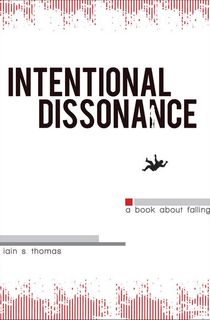
Intentional Dissonance
Ten years after the end of the world in NewLand, the last city on Earth, the general populace is kept in a state of artificial happiness via antidepressants put in the water supply.
Jon Salt is addicted to Sadness, an illegal drug that induces melancholy, and he’s also paralyzed by an all-consuming obsession with his lover, Michelle. Jon can physically manifest his thoughts into reality, and the last government on Earth targets him to exploit his power for sinister ends, forcing Jon to go on the run with a bizarre group of allies.
Widespread, reckless use of teleportation technology previously fractured the fabric of time and space, leaving behind temporal anomalies and ghosts stuck in repeating loops because they are tethered to moments of intense human experience, functioning as both a literal sci-fi consequence and a deeply poetic metaphor for human memory, trauma, and routine.
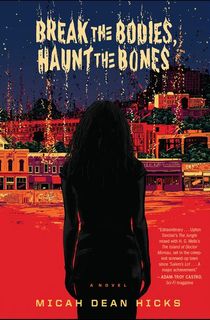
Break The Bodies, Haunt The Bones
In the dying, ghost-filled factory town of Swine Hill, where the dead outnumber the living and linger in places that meant the most to them, a family is haunted, each member by their own ghost. Jane carries a ghost girl who feeds on secrets and fears, a genius ghost drives her brother Henry to build dangerous machines, and their mother is possessed by a spirit that burns anyone she touches.
When new arrivals secure precious jobs at the town's last pork processing plant, it sparks violent outrage from both the living and the dead residents, and Jane must save her family and escape the town before it’s too late.
When ghosts become extensions of the self, what does it mean to be someone? And how does place shape who you become when ghosts are inextricably linked to it?
“They could hurt you. Worse, they could change you.” — Micah Dean Hicks, Break The Bodies, Haunt The Bones
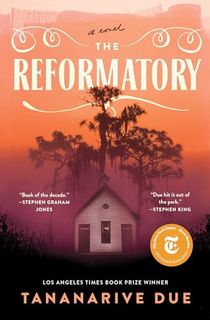
The Reformatory
It is June 1950 in Jim Crow Florida, and 12-year-old Robbie Stephens Jr. is sentenced to six months at the Gracetown School for Boys (The Reformatory) after kicking the son of a powerful local landowner to protect his older sister Gloria.
Robbie has a unique gift. He can see ghosts, or “haints.” At the reformatory, these spirits reveal the dark, fatal truths of missing boys and systemic abuse at the school. Meanwhile, Gloria fights relentlessly on the outside to secure his release.
While the supernatural haints are frightening, the living oppressors are far more monstrous. The dead walk beside the living, aid in resistance, and offer spectral dignity to Black children whose lives and tragedies were discarded by the state.

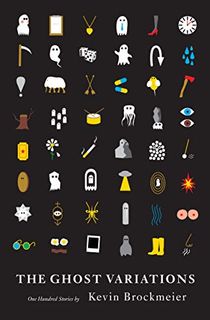
The Ghost Variations
This flash-fiction collection features 100 short stories about ghosts, mortality, and the afterlife. Divided into 11 sections (e.g., Ghosts and Nature, Ghosts and Belief, Ghosts and Speculation), Brockmeier imagines unusual spectral encounters, from parakeets acting as mouthpieces for the dead to ghost trees haunting a wooden house, and spirits reliving missed chances at love.
What happens when the dead become narrators? The most haunting possibility is that death gives a person just a different set of problems.
“[…] they watch the ghost emerging from her pleat in space and time and wonder if their lives will slip by like hers did, leaving them fastened so hopelessly, so desperately, to the past. As if a life could work any other way. As if that weren't precisely what a life must do.” — Kevin Brockmeier, The Ghost Variations
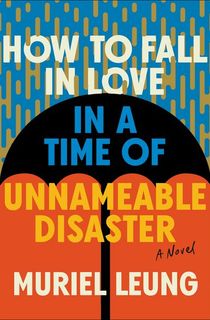
How to Fall in Love in a Time of Unnameable Disaster

After acid rainstorms turn the city into a toxic wasteland, New York City's remaining residents are completely isolated from one another, except for an unlikely family of humans and ghosts living in a public housing project on the Lower East Side.
Mira is dealing with a difficult breakup; her mother has strange, furious dreams; her boisterous poltergeist grandfather shouts into the rain; and the ghost cockroach across the hall, Shin, is in a state of perpetual panic.
How does community-building and radical intimacy change when the line between the living and the dead is fundamentally dissolved? How about when everyone is grieving the end of the world?
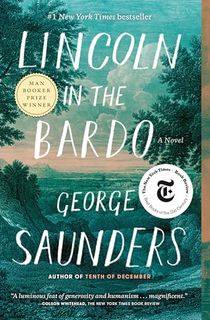
Lincoln in the Bardo
Over a single freezing night in Oak Hill Cemetery in February 1862, President Abraham Lincoln visits the crypt to hold the body of his 11-year-old son, Willow Lincoln, who has just died of typhoid fever.
Willie then finds himself in the bardo, a Tibetan Buddhist transitional state between life and rebirth, populated by a chorus of chatty, tormented, deeply attached ghosts trapped by their earthly regrets and denying they're even dead at all.
Characters at each stage of life and death must learn to love and live with the knowledge that loss is inevitable.
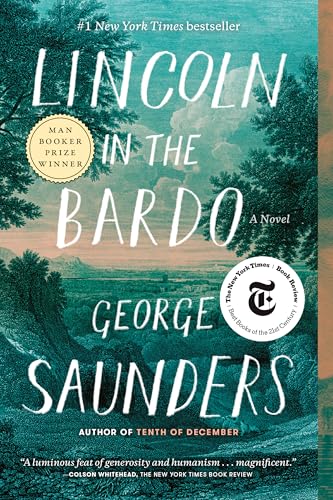
“We must try to see each other in this way. As suffering, limited beings. Perennially outmatched by circumstance, inadequately endowed with compensatory graces.” — George Saunders, Lincoln in the Bardo
Featured photos (left to right): Wikimedia Commons; Wikimedia Commons; Wikimedia Commons; Wikimedia Commons; Wikimedia Commons


