
After rising to prominence in early 2020, cozy fantasy is here to stay. These hopeful, low-stakes tales of found families are the perfect antidote to the chaos all around us, comforting readers with the sensory details of cocoa or sweet jams. Among the most prominent recent examples of cozy fantasy are Travis Baldree’s Legends & Lattes, in which a retired battle orc settles down to open a coffee shop, or T.J. Klune’s The House in the Cerulean Sea, where a recluse travels to a magical island to meet six remarkable children and their caretaker.
When done correctly, these works contain a fairy-tale feel that’s somehow familiar, even if it’s the first time you’ve ever read a cozy fantasy. But how do authors come up with their own magical worlds full of heart and wonder? And just as importantly, how do they differentiate themselves in an ever-more-crowded space in which the reader starts the first page with specific expectations and demands?
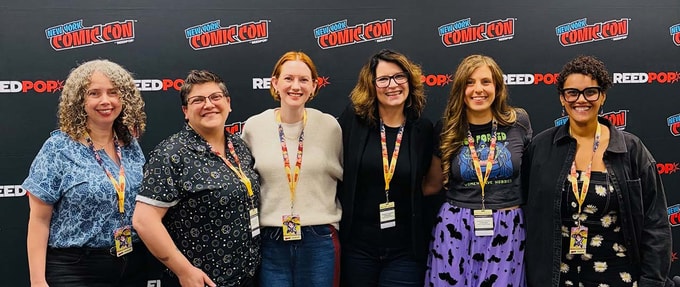
Some of the bestselling and most-celebrated cozy fantasy authors gathered at New York Comic Con to discuss their processes, starting with how they define cozy fantasy.
Where to Get Started With Cozy Fantasy?
“An author has to live in the world they create for a year,” said Meg Cabot, best known for her work on The Princess Diaries and whose cozy fantasy titles include The Witches of West Harbor series. “Writing cozy fantasy means making a world you actually want to live in, and it can be a balm in your real life.”
“Cozy is about aiming yourself toward a dream,” added Sarah Beth Durst, author of The Spellshop, “but not necessarily about achieving it. It’s like The Lord of the Rings if we never left The Shire and just had second breakfast.”
Other panelists, including Autumn K. England (Field Guide for the Formerly Villainous), Morgan Elizabeth (Meet Cute Magic), and Rachel Griffin (The Sun and the Starmaker) noted that cozy fantasy needed to start with individual- and community-based stakes. While it’s natural for a plot or a setting to follow grand, world-changing events, it’s essential that cozy always returns to the personal.
What’s the Most Important Part of a Cozy Fantasy?
Given the individual- or community-based stakes, perhaps it’s unsurprising that the most important part of cozy fantasy isn’t the setting or the sensory details. It’s the character work.
Because the physical journey is slower in cozy fantasy than in other sorts of stories, it’s essential that both the author and the reader fall in love with the characters. That way, there’s a compelling emotional journey to invest in even when the plot might be more slow-moving.
How Do You Build a Cozy World When Individual Stakes Are Most Important?
Durst says she follows the rule of awesome. “I start with a list of things that make me happy. I pick one cool thing and then I ask, ‘If this is true, what’s the most awesome thing that could also be true because of it?’” By following that line of questioning, she can create a whole string of inventions that become the foundation for a world that readers actually want to inhabit.
Others say that the world itself can be built to counterbalance the tension necessary to propel readers through the plot. If they’re writing a scene where a character must deal with a difficult choice or past trauma, a talking houseplant or a sweet treat might smooth those rough edges. Taking a beat or a breath is essential in cozy fantasy, rather than writing something that constantly builds into a Sanderlanche-style ending.
Cozy Fantasy Isn’t About Building a Perfect World.
It’s about making something awesome but flawed, just like our world, and leading with the premise that everything will be okay in the end, despite challenges and difficult circumstances. That’s what resonates with readers, and that’s what these authors have done so well in their own works.
Read More From These Cozy Fantasy Authors
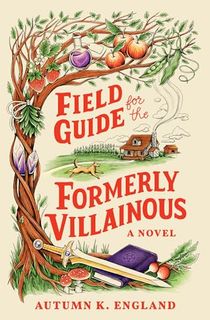
Field Guide for the Formerly Villainous
In a work that's perfect for fans of Stardew Valley and Studio Ghibli, Oaklin Nettlewood flees a war-torn world (and her own complicity) with an oath never to perform magic again. When they meets a ghost granny in the small farm on the edge of Mossley's Rest, however, Oaklin finds unlikely companions and the courage to start over.
What happens when an investigator comes to their new home, hunting people like Oaklin? Maybe they don't deserve a happy ending, after all.
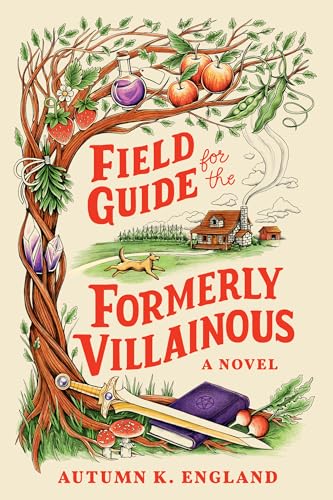
Insatiable

Just because Insatiable is about vampires doesn't mean it has to be melodramatic. The novel follows Meena Harper, a soap opera writer who finds herself thrust into a world of vampires and vampire hunters in a work that Publishers Weekly praised, saying, “Cabot winningly applies her trademark likably fallible protagonists and breezy storytelling to a vampire war in New York City.”
Meet Cute Magic
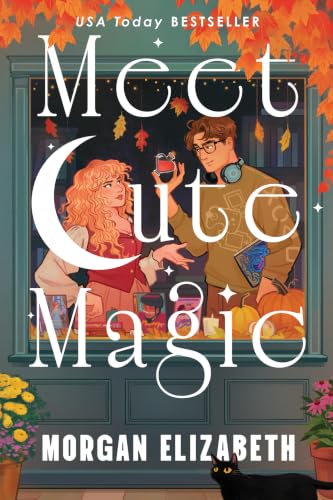
Bookstore owner Rosie Mayfield can't fall in love because of a family curse. To break it, she'll need the help of a local ghost and his living grandson, Jack Haggerty, who owns the local gaming shop. The only problem? Jack's the only person in all of Heartwood Hollow who can't stand her.
A cozy enemies-to-lovers witchy fantasy, this one is perfect to read during spooky season.
The Sun and the Starmaker
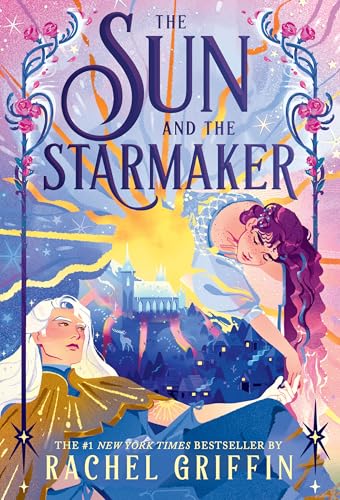
A fairy tale about fairy tales, Aurora Finch grew up on stories of the Starmaker, who trudges across the northern ranges of snow and ice to provide remote villages with much-needed light. She never expected to meet him, and certainly not on the morning of her wedding. When he asks her to study magic under his guidance, Aurora leaves the life she's always known.
To start, the Starmaker is as cold and distant as his isolated castle, but the more Aurora learns about him, the more she can't help but pull closer to him and the secrets he holds so dear.
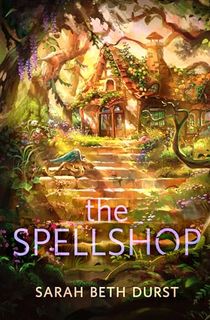
The Spellshop
Kiela the librarian fled the empire's capital with a cache of stolen spellbooks and an illegal sentient spider plant named Caz. She'd like to lie low in her childhood home, but a nosy (and very handsome) neighbor won't let her simply hide herself away. She has the power to fix many of the town's problems, but doing so requires forbidden magic that she's never practiced.
Is she willing to risk herself to save her new friends and found family?

Featured image: Meg Cabot / Threads


