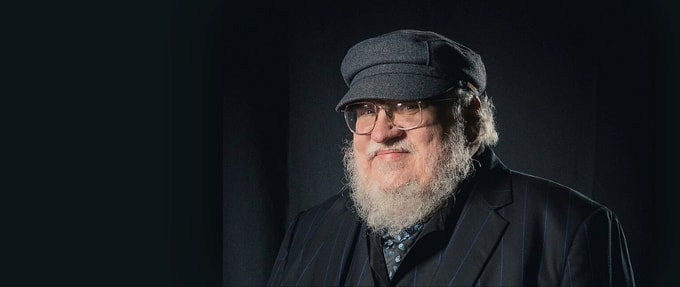
In 1994, George R.R. Martin left Hollywood after years of writing and producing projects like The Twilight Zone (1986) and Beauty and the Beast (1987), frustrated by the financial and creative limits of television production. He returned to prose to write the grand, unfiltered fantasy epic he truly wanted to tell.
The result was A Song of Ice and Fire (ASOIAF): a series originally imagined as a trilogy but instead expanded into seven planned volumes. Thirty years later, Martin's worlds have grown beyond anything he could’ve imagined. ASOIAF fans have learned true patience, not only because the books are long, but because Martin’s method has given Westeros room to never stop growing.
Here's what his process looks like.
The Timeline: 5 Books in 15 Years
A Game of Thrones
In 1994, Martin sent his agent, Kirby McCauley, a story outline with detailed trilogy plans and a 200-page manuscript of the first book. Martin aimed to cover the entire Stark-Lannister civil war in the first book and envisioned each book at around 700-800 pages.
But he soon found himself with 1,400 unfinished pages and a manuscript too long to be a single volume. Martin decided to split the pages, expanded the project into four books, and delivered an 1,100-page manuscript, which was published as A Game of Thrones in August 1996.
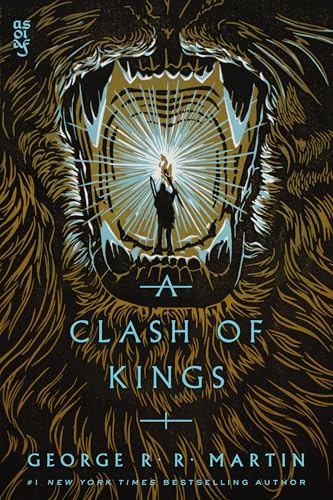
A Clash of Kings
Soon after the first release, Martin realized he had once again underestimated his story's scope and rewrote the outline to include six books, envisioned as two linked trilogies.
The extra pages from A Game of Thrones gave Martin a 300-page head start on the second book, A Clash of Kings, which was published in February 1999.
A Storm of Swords
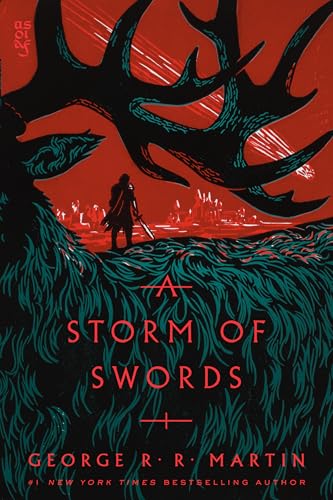
By the time Martin began the third novel, published in August 2000, he had already written Tyrion Lannister’s POV chapters while finishing A Clash of Kings.
As the narrative and character subplots grew increasingly complex, Martin finally settled on a seven-book proposal to properly conclude the overarching saga.
A Feast for Crows
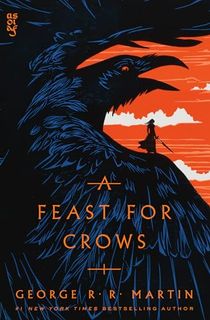
Martin originally planned for the fourth book, then titled A Dance with Dragons, to take place five years after A Storm of Swords to age up the younger characters.
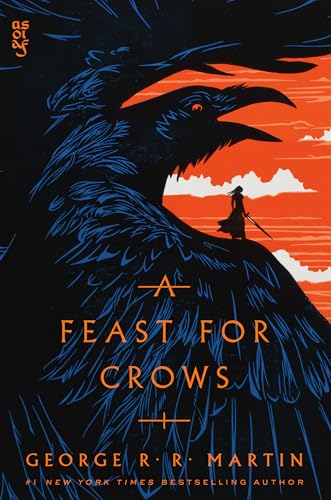
But after about 12 months of writing, Martin realized the five-year gap required too many clunky flashbacks for characters like Jon Snow or Cersei Lannister, and he officially abandoned the time jump around 2001 to write the intervening years in real time, picking up the narrative immediately in A Feast for Crows, published in October 2005.
A Dance with Dragons
Everything Martin wanted to include in the fourth book was too large to bind, so Martin split the storylines geographically and wrote two separate parallel narratives.
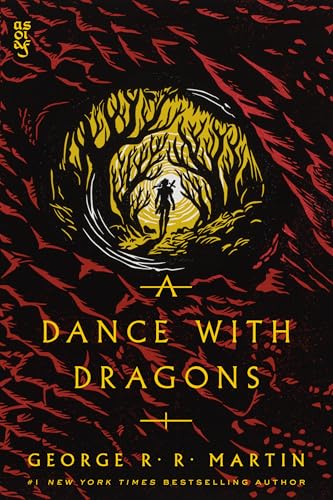
This created massive structural, pacing, and continuity hurdles that took years to untangle and rewrite. A Dance with Dragons was released in July 2011, five years later than the originally planned.
Companion works and prequels include The World of Ice & Fire, A Knight of the Seven Kingdoms, and Fire & Blood. The final two books in the series, The Winds of Winter and A Dream of Spring, are both still being written with no set release dates.
WordStar 4.0 and the Case for Fewer Distractions
Martin famously uses WordStar 4.0 for all his writing, a word-processing program released in 1987. He runs it on an MS-DOS computer that's entirely offline.
The simple interface protects his writing time from various distractions like email, web browsing, and social media. Martin also dislikes modern text features like auto-correct, spell-check, and auto-formatting, and favors WordStar 4.0 for the complete, manual control over every character and word he types.
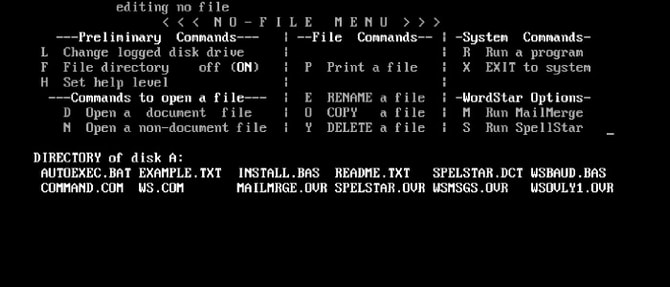

Screenshot of WordStar 3.2
In a 2002 interview with January Magazine, Martin said this about his writing schedule:
“I get up every day and work in the morning. I have my coffee and get to work. On good days I look up and it's dark outside and the whole day has gone by and I don't know where it's gone. But there's bad days, too. Where I struggle and sweat and a half hour creeps by and I've written three words. And half a day creeps by and I've written a sentence and a half and then I quit for the day and play computer games. You know, sometimes you eat the bear and sometimes the bear eats you.”
Although the word-processing program must now run on retro hardware or a modern emulator, it seems Martin believes that constant connectivity interferes with deep concentration.
The internet isn't the only thing competing for his attention. Beyond the novels, Martin’s time is split between producing and writing for shows like House of the Dragon and developing others, as well as editing the science fiction superhero series Wild Cards and worldbuilding for video games like Elden Ring. Martin also runs the Jean Cocteau Cinema in Santa Fe and posts on his Not a Blog.
Martin's creative life is abundant, which is why WordStar 4.0 matters all the more and can give the books a protected space where Westeros gets his full attention.
Where It All Began
Martin got the initial idea for A Game of Thrones in the summer of 1991 in Hollywood while working on television production and a science fiction novel called Avalon. The novel's opening scene, a young boy witnessing a beheading in the snow and discovering a litter of direwolf pups, came to him so vividly that he set Avalon aside and wrote the opening sequence in about three days. One chapter led to another, and the world and its history soon grew alongside it.
As for inspiration to come, some elements of the series have traceable seeds. For instance, the Wall came from his 1981 visit to Hadrian’s Wall, the War of the Roses inspired much of the first novel, and the Red Wedding came from both the Glencoe Massacre and the Scottish Black Dinner.
However, in a 2022 blog post, Martin resisted any singular explanation on where he gets his ideas:
“When confronted with the same question, Harlan Ellison used to say, ‘Schenectady.’ The ancient Greeks spoke of the muses. Freud talked of the conscious and subconscious minds, the id, the ego, the superego. More recently, we hear about the right brain and the left brain, one analytic and rational, the other imaginative and creative. I am pretty sure the answer is not Schenectady, but aside from that… hell, I don’t know.”
Martin didn’t have a complete map of Westeros or a codified magic system, just a snow-covered landscape, a dead direwolf, and children who would be changed forever by what they found.
Architect or Gardener?
According to Martin, writers can be described as either architects or gardeners.
Architects design the whole house before driving the first nail. They know the dimensions of every bedroom and which tile will line the bathroom walls. Gardeners, on the other hand, plant a seed, water it, and discover the plant’s shape as it grows.
While the gardener isn’t going in completely blind because the type of seed planted is clear, the plant’s full form is largely dependent on conditions the writer can’t fully predict, like weather, soil, and time.
While every writer has both architect and gardener traits, Martin sees himself as closest to the gardener. For him, the seed is the story, and the worldbuilding, character development, and narrative connections grow in the process of drafting.
What Gardening Means in Practice
- Plant a strong narrative scene. Beginning with an image or moment powerful enough to keep the page’s attention.
- Write toward the next compelling moment instead of filling in an outline. Follow the story toward what feels dramatically alive.
- Let characters make decisions. If choice creates a new problem, write it out instead of putting the character back onto any preplanned track.
- Discover the world through consequences. Just as you follow your characters' choices, follow the consequences of systemic decisions.
- Revise backward. When a later discovery changes the meaning of an early chapter, return and rewrite it.
- Be patient with the process. Some days you'll write three words, and some days the whole day disappears — both count as progress toward a story worth telling.
Writing People Instead of Outlines
When writing for film in Hollywood, Martin routinely pushed back on requests for outlines before the full script was finished, and now that Martin can take full advantage of his procedural freedom, he avoids them entirely, equating outlining with “retelling” rather than telling the story for the first time. By spoiling the story for himself, he feels that he loses the excitement of discovering connective narrative elements that would otherwise be difficult to plan.
So, what does Martin do when he gets stuck without an outline?
Instead of forcing his way through a blocked chapter or pivoting to another narrative timeline, Martin changes perspective and starts from another character’s experience of the same events. While this does add to his workload, as these pages might never be used in the published text, Martin can use this method to learn about his characters and the limits of his plot points. This can help the rewrite of the blocked chapter flow more smoothly.
Martin's use of the rotating third-person limited perspective (the story is told through the inner thoughts of a single character at a time) mimics how readers naturally experience a story, and the narrative control Martin has over each character's emotional lens allows for a uniquely character-driven plot. Tyrion’s chapters are witty, intelligent, and vulnerably shaped by his struggle for acceptance. Arya’s are marked by youthful determination and trauma. Jon’s are dutiful and weighed down by responsibility.
Major events and unpredictable twists happen because of the specific desires and mistakes of the characters rather than a pre-planned master plot forcing them into place, and the reader is able to see one world in recognizably different ways.
The Meereenese Knot
Producing character-driven plots is extremely difficult, largely because of the massive scale and the subsequently intersecting consequences of the characters' choices. Because he refuses to force characters to make choices that contradict their personalities just to wrap up a plotline, the narrative instinctively branches into unexpected subplots, most notably Martin’s struggles with the “Meereenese Knot.”
The Meereenese Knot was a plot-dependency issue that began while writing A Dance With Dragons before it was split to accompany A Feast for Crows. The knot was a direct consequence of abandoning the five-year time jump between the third and fourth novels.
An ensemble of characters was set to arrive in the city of Meereen, and Martin spent a year or so trying to time each arrival and the necessary sequence of events. It was essentially the middle of the story, and the characters had drifted so far apart from the first novel that pulling them back together for a cohesive climax required intricate logistical maneuvering without making their reunions feel inauthentic.
Martin's primary breakthrough in untangling the narrative roadblock was adding new perspectives, like Ser Barristan Selmy's, who could stay in Meereen, anchor the ongoing siege, and help establish a clear timeline after Daenerys Targaryen flies away on Drogon.
Again, you can see here that the solution for Martin is often to simply write more. More chapters from more points of view, either for his own clarity, for the plot, or for the reader's experience. This is commonly cited as a weakness of the gardening method. While organically discovering large portions of the story through the characters can be more rewarding, it often requires more revision and more rewriting than using a structured outline.
For the same reason Martin can't finalize early chapters because of inevitable later discoveries, progress is less trackable, and he no longer publicly predicts release dates. While this can add years to his timeline, Martin ensures the finished product is always written with the utmost intention. Through the entire drafting process, Martin rewrites at the sentence level and tightens dialogue, action, and description before formal editing begins with his publishers.
The Icebergs of Worldbuilding
In a 2014 interview with 92NY, Martin describes Tolkien as having "invented modern epic fantasy in its current form.” While earlier fantasy literature was written in the vein of fairy tales, Tolkien’s worlds featured extensive appendices and genealogies and felt real enough that readers began to expect fully realized secondary worlds. Martin states that for Tolkien, “the world creation and the creation of languages was almost primary.”
Martin likens this effect to an iceberg. About three-quarters of an iceberg is submerged underwater, so even though the reader sees only a fraction on the page, Tolkien's iceberg was fully fledged beneath the surface. While many authors say this type of preparation can lead to “worldbuilder's disease,” where creators are so intent on forming the world that they forget to work on the actual text, Martin says that too many fantasy writers post-Tolkien try to create the illusion of an iceberg with “some ice on a raft," including Martin himself in the beginning. Since he begins his “gardening" with just the story and the scene's characters, Martin was discovering the world as he wrote, and as his readers became increasingly curious.
As much as Martin credits Tolkien for laying the modern epic fantasy groundwork, he also critiqued Aragorn's governance ethos in a 2014 interview with Rolling Stone:
“Lord of the Rings had a very medieval philosophy: that if the king was a good man, the land would prosper. We look at real history and it's not that simple. [...] What was Aragorn's tax policy? Did he maintain a standing army? […]
In real life, real-life kings had real-life problems to deal with. Just being a good guy was not the answer. You had to make hard, hard decisions. Sometimes what seemed to be a good decision turned around and bit you in the ass; it was the law of unintended consequences. I've tried to get at some of these in my books. My people who are trying to rule don't have an easy time of it. Just having good intentions doesn't make you a wise king.”
Martin's worldbuilding extends all the way into working out the foundational components of a society. A kingdom has to feed itself, survive plague and invasion, and decide who can use violence and who checks it. Eventually, it makes promises it can no longer afford to keep, so who comes to that conclusion, and why?
Events in ASOIAF rarely feel arbitrary because the plot is driven by very real, foundational pressures present in our current world.
Historical Influences
To build a world with that kind of complexity, Martin also avoids drawing from a single source. He takes what he calls a “mix-and-match approach to history,” combining events from different eras and cultures instead of writing one-to-one allegories of a single historical event.
We see this in the conflict between the Stark and Lannister families, which is comparable to England's Wars of the Roses (York vs. Lancaster), but Eddard Stark is not a perfect stand-in for any single historical duke. Westeros's knights and plate armor resemble those of the High and Late Middle Ages, but the Wall is explicitly inspired by Hadrian's Wall and was built by the Roman Empire in the 2nd century. The Dothraki are inspired by the Mongols, the Huns, Native American tribes of the Great Plains, and the Alans.
Readers are unable to map the story into a known history and predict where it’s going. The sources are blended, and the result is a world that feels as unpredictable as experiencing real history does.
Why Westeros's Magic Always Comes With a Price
Martin’s insistence that institutions have consequences extends to the supernatural. He dislikes magic systems with elaborate codified rules, and he’s skeptical of worlds where magic is powerful enough to trivialize politics and war.
If one person held enough magic to drastically change society’s conditions, they would be king, and any author who includes that kind of power has to follow it through to the politics, economies, and social order it would upend. Adding magic while leaving everything else untouched would misrepresent how any world works. In Westeros, magic mostly appears through prophecies, deep dreams, and ancient myths.
Dragons are among the story's most powerful forces, and Martin’s concern for plausibility also extends into their design. His dragons follow real-world evolutionary logic, as much as anyone can when concerning dragons, in giving them two legs and two wings (like bats, birds, and pterosaurs) rather than the traditional four legs plus wings, noting that no real vertebrate has ever had six limbs. His dragons also require real-world biological inputs like food, water, and oxygen, making them feel like real beings.
High-fantasy elements aside, Martin grounds his storytelling in how real people emotionally and practically react to extraordinary events.
Maps, Notes, and Fact Checkers
One could only imagine how difficult it must be for Martin to keep track of his worlds and their lore as the A Song of Ice and Fire series has grown. He relies heavily on large-scale maps from The Lands of Ice and Fire (the official series map collection), scribbled notes, computer files tracking timelines, and the fan-run wiki Westeros.org.
Martin started consulting the site’s founders in the late 1990s after Linda Antonsson and Elio Garcia contacted Martin for permission to use Westeros for an online game. The lore experts have since worked with Martin on routine factchecking and continuity research and even co-authored The World of Ice & Fire, published in 2014.
When the Show Outran the Books
After HBO’s A Game of Thrones adaptation became a massive success, they produced eight seasons in eight years, and in a 2021 WTTW Chicago interview, Martin discussed his mindset as he realized the showrunners would outpace his written material:
"When they began that series [...] I had a five book head start. And these are gigantic books, as you know. I never thought they would catch up with me, but they did. They caught up with me and passed me, and, you know, that made it a little strange — because now, the show was ahead of me, and the show was going in somewhat different directions."
In 2015, the show’s fifth season officially passed the books, and by season six, it moved entirely past published material and picked up a quicker pace. Martin originally gave the showrunners a rough outline of his planned ending, but the creative execution of later seasons left him out of the loop.
The show’s finale received severe backlash from series fans, and while Martin initially claimed the controversy wouldn't change his planned ending, even calling the conclusion of the HBO series a “liberation,” it inevitably forced him to navigate a story whose roughly planned finale was already at least partly spoiled or heavily debated.
The Case and Cost of Writing Without a Map
To finish the series, much like unraveling the Meereenese Knot, Martin must weave dozens of major character perspectives and intersecting storylines into a coherent conclusion. In a January 2026 interview with USA Today, Martin said he had written about 1,100 manuscript pages, but he still has hundreds more to go. It’s hard to overstate the anticipation among millions of fans awaiting the next book’s release, and most of Martin’s public statements about the series attract significant attention.
Martin has always been honest about his process and its roadblocks. He started writing these novels because inspiration struck, and he kept writing because he is a storyteller who chases his imagination instead of commercial fame or anyone’s expectations. We see the repercussions of a quick finish in the response to the series finale, and one can only hope the novels don’t meet the same fate.
Some stories can’t be built from a blueprint, but must be grown, and all good things take time to grow.
“The best fantasy is written in the language of dreams. It is alive as dreams are alive, more real than real … for a moment at least … that long magic moment before we wake.” — George R.R. Martin, “On Fantasy”
Featured photo: Wikimedia Commons


